Head north to Maine for MudFest

Head north to Maine for MudFest

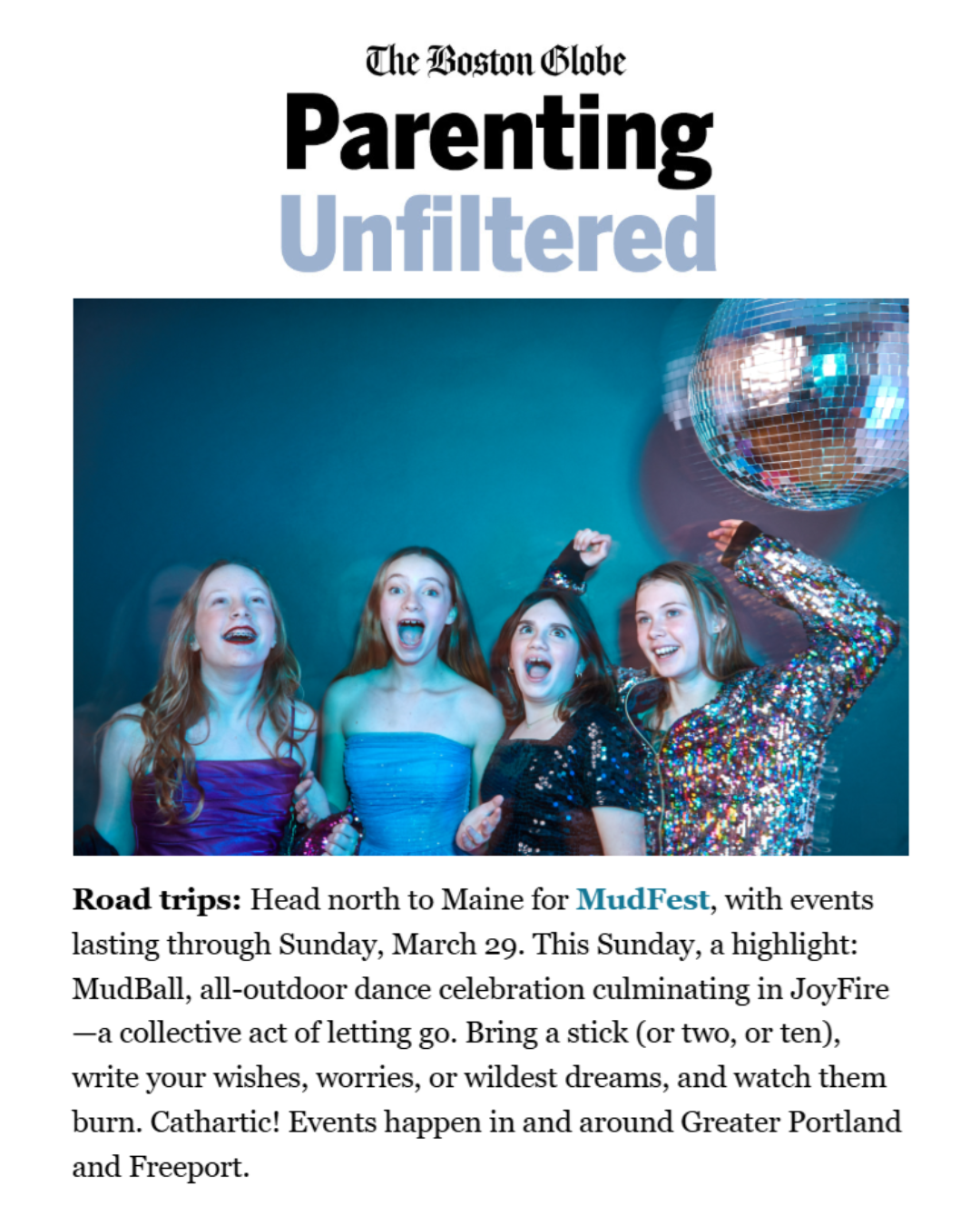
Road trips: Head north to Maine for MudFest, with events lasting through Sunday, March 29. This Sunday, a highlight: MudBall, all-outdoor dance celebration culminating in JoyFire—a collective act of letting go. Bring a stick (or two, or ten), write your wishes, worries, or wildest dreams, and watch them burn. Cathartic! Events happen in and around Greater Portland and Freeport.

Read More

Pull yourself out of Maine’s mud season with Classical Uprising’s joyous ‘Mudfest’ events

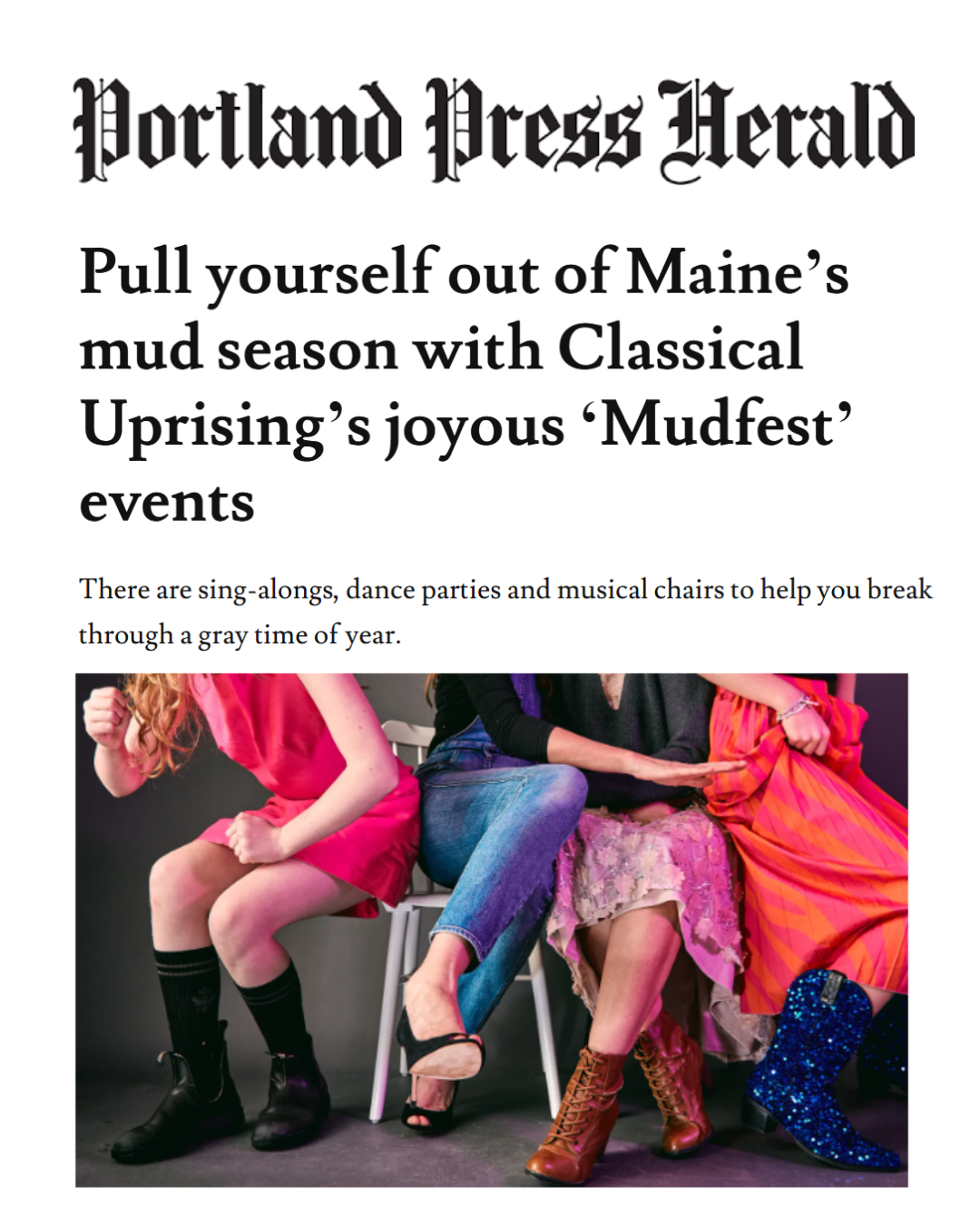
Pull yourself out of Maine’s mud season with Classical Uprising’s joyous ‘Mudfest’ events

Mud season is officially upon us. Mainers know this transitional time all too well. Winter’s chill is giving way, snow and ice are melting, and boots are still our best friends when navigating messy streets and sidewalks. Skiers are sad an epic season is over, gardeners are eager to put seed to soil, and all of us yearn to spot those first daffodils — but we must wait a bit longer.

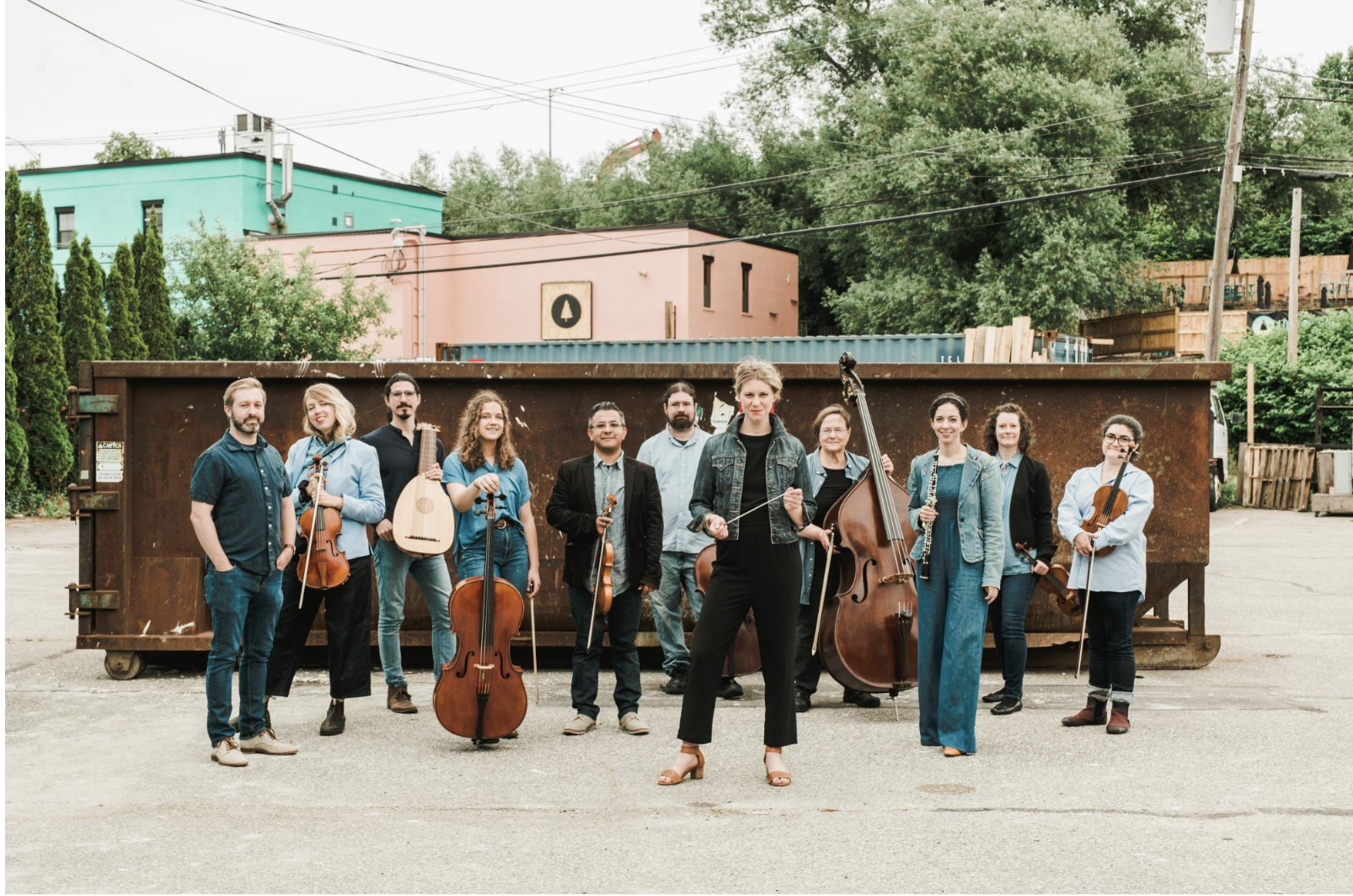
What’s a Mainer to do? Classical Uprising has just the ticket. The Portland-based organization known for its boldly innovative, delightfully upbeat musical performances is delivering all that and more during the state’s famous “fifth season.”

Cleverly dubbed “MudFest,” the festival is designed to bring joy, inclusivity, and community connection to an often bleak, isolating time of year.

Read More

New festival takes classical music off the stage and into the mud

New festival takes classical music off the stage and into the mud

“When we gather in community, when we dance and lift our voices, we really become alive again,” Isaacson said. “And so, we created a series of events that encourage you to come out of isolation, to connect, to refuel burnout through play and despair through collective energy and to really promote being silly and playful.”

Two years later, Maine’s first Mudfest is set to energize and inspire people of all ages through events like live-orchestra musical chairs, choir-singing in a brewery and an all-out dance party, complete with a Burning-Man-style bonfire.

The ethos of Mudfest is in lockstep with the aims of Classical Uprising, which works to “challenge current norms and re-envision where, how and for whom we make music,” Isaacson said. For more than a decade, she said the group has been performing, hosting events and leading educational programs that bring classical music into the everyday lives of community members and into unexpected spaces, like bars and bowling alleys.

Read More

‘Beautiful’ and ‘messy’: Emily Isaacson ’04 reimagines classical music with Mudfest

‘Beautiful’ and ‘messy’: Emily Isaacson ’04 reimagines classical music with Mudfest

Subverting the culture around classical music through mess is just one way that Classical Uprising realizes its mission of making the genre more approachable. In conversations with contemporary composers, Isaacson has found that many artists want their music to be a part of average people’s everyday lives. “People [assume] classical music is elitist, it’s snobby, [and they] have to know about how to dress and how to act,” Isaacson said. “And that’s ridiculous.”

To break down the exclusionary expectations around classical music, Classical Uprising holds performances in unexpected venues, ranging from bowling alleys to breweries. When classical music appears in familiar settings, Isaacson explained, audiences often feel less constrained by traditional expectations and are able to appreciate the music for what it is. “The negative expectations get torn away, and people are much more [receptive],” she said. “Their spirit is more open to seeing what the art could do for them.”

Read More

Conductor Emily Isaacson Is Jazzing Up Maine’s Classical-Concert Scene

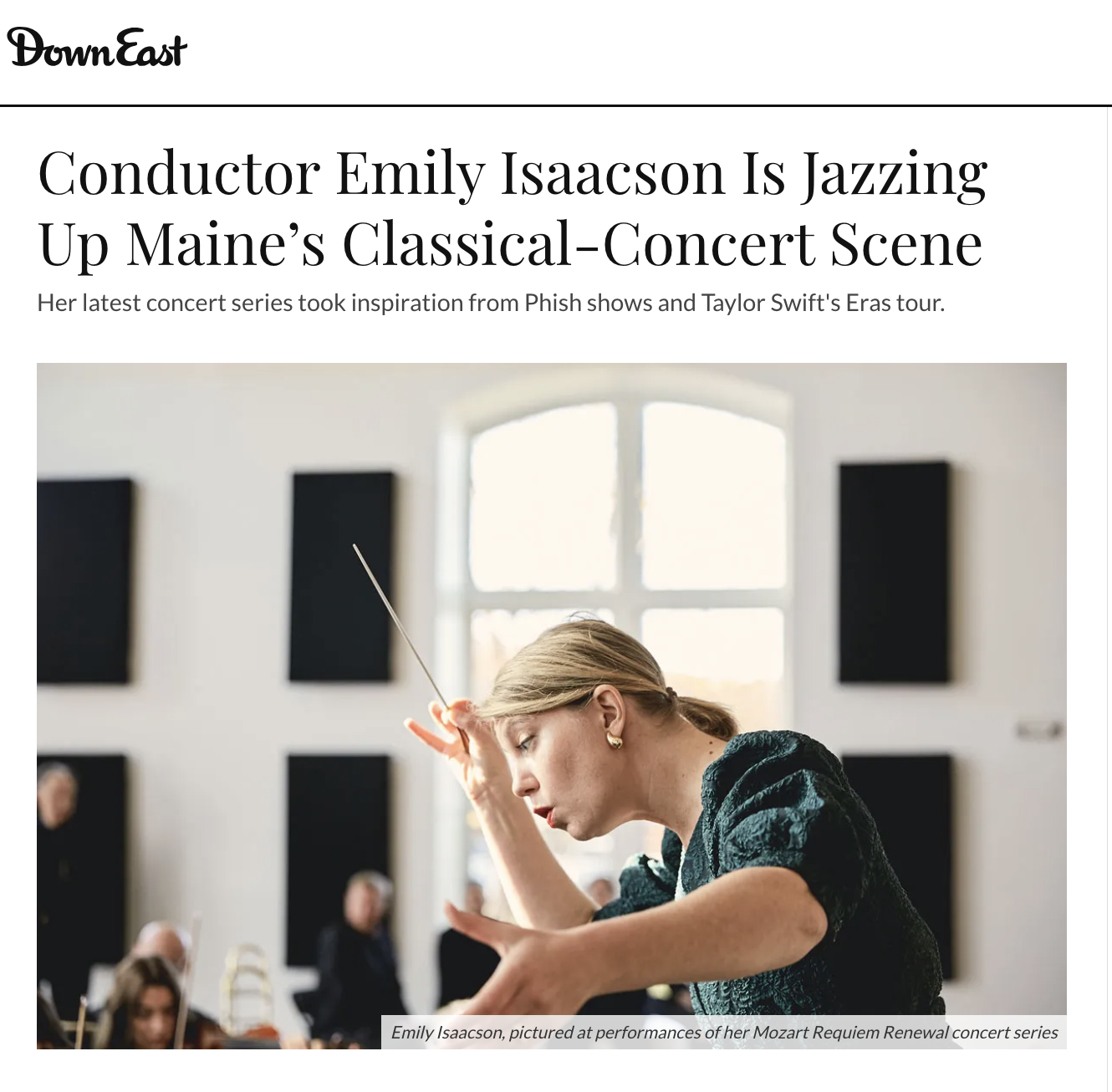
Conductor Emily Isaacson Is Jazzing Up Maine’s Classical-Concert Scene

Isaacson was conducting the first rehearsal of the season for Classical Uprising. During a series of fall concerts, the group would perform ancient Roman Catholic liturgical chants and Duruflé’s Requiem with unexpected changes in rhythm and tempo reminiscent of avant-garde 1950s and ’60s composers. Dramatic lighting effects, inspired by Phish concerts and Taylor Swift’s Eras tour, would heighten the emotional impact of the music. “The theme of a lot of classical concerts is, ‘We’re going to take you back to this specific moment when Schubert wrote this quartet,’” Isaacson says. “This is more like a time-travel experience, where we’re transporting you from the ancient world to the now by playing with the music in a modern way.” 

Read More

Musicians asked Portland kids about growing up in Maine. This concert is their answer.

Musicians asked Portland kids about growing up in Maine. This concert is their answer.

This is not just a playground game. It’s rehearsal. Isaacson is the founder and artistic director of the nonprofit Classical Uprising. Nearly two years ago, she and composer Judd Greenstein started working with these students to develop an original piece of music… “Growing Up Maine” is a concert-length work that was born out of their poems and hand clapping games and interviews.

“It’s a musical portrait of a community in transition, told by the children who are transforming it,” Isaacson said.

Read More

Mozart never finished his 'Requiem.' This Portland musician decided to try

Mozart never finished his 'Requiem.' This Portland musician decided to try

Isaacson set herself the task Mozart’s student had centuries before – to finish his “Requiem” – but she wanted to reimagine his historic work for people in the 21st century. The result is “Mozart Requiem Renewal.”

“What if I use the unfinished nature of Mozart’s ‘Requiem’ as an opportunity not just to finish it in this modern musical language, but also to reconceptualize it not as a Mass for the dead?” said Isaacson, who lives in Portland. “I’m not thinking about my dad burning in a fiery hell. I’m not thinking about, how is he going to be judged? In fact, I don’t really want to focus on his death. I want to focus on his life. How can we reconceive this work as a celebration of life?”

“Grief makes you do bold things that you wouldn’t do otherwise.”

Read More

20 Outstanding Women of 2024

20 Outstanding Women of 2024

Recognized for her transformative work, Emily has received prestigious accolades including Artist of the Year by the Maine Arts Commission and recognition as one of the 50 Mainers Leading the State by Maine Magazine. Her commitment to empowering communities through music exemplifies her dedication to being the change she wants to see in the world. Emily Isaacson is an inspirational figure shaping the future of classical music and cultural expression.

Read More

Why mess with Messiah? - Slipped Disc

Why mess with Messiah? - Slipped Disc

Why mess with Messiah? So that more people can share in its power.
Messiah, by George Frideric Handel (1685–1759), tells the story of one man’s work to make his world a better place. The original composition was conceived as an Easter offering that chronicled Jesus’s birth, death, and resurrection. On a macro level, this is a story of creation, struggle, and transformation. This macro narrative is universal, and Handel’s music manifests these human experiences with incredible eloquence, but on a micro level, the details are limiting to other religions and frameworks of identity. Messiah Multiplied employs Handel’s powerful music, modifying and emboldening the libretto to reflect a more universal and inclusive story.

Read More

Star Tribune: Classical Uprising performs 'The [uncertain] Four Seasons' that reflects climate change

Star Tribune: Classical Uprising performs 'The [uncertain] Four Seasons' that reflects climate change

In 2021, 14 orchestras around the world performed versions of "The Four Seasons" for which an algorithm shaped the music according to projected local conditions. Last year, the U.S. premiere was presented by Maine's Classical Uprising. And now that group's leader, Emily Isaacson, will conduct a made-for-Minnesota edition at St. Catherine University's O'Shaughnessy Auditorium on Saturday night, leading the Minnesota Opera Orchestra and violin soloist Jesse Irons.

Isaacson's arrangement alters Vivaldi's music according to climate data from the United Nations Intergovernmental Panel on Climate Change's latest reports, but also has a fair amount of Vivaldi's original for comparison purposes. So where birds chirp in Vivaldi, there may be silence in the 2050 take because of species decline and migration. And those summertime storms may not pass as quickly as they once did.

"One of the reasons that I made the arrangement is that some of the changes require familiarity with the original," Isaacson said from her home in Portland, Maine. "But even if you're not a music nerd, you've heard Vivaldi's music while waiting at the dentist's office or on hold for something. It's like it's in the vernacular of our culture in a way that not all music is."

Read More

Twin Cities Pioneer Press: With ‘The [Uncertain] Four Seasons,’ classical musicians and St. Kate student poets tackle climate change

Twin Cities Pioneer Press: With ‘The [Uncertain] Four Seasons,’ classical musicians and St. Kate student poets tackle climate change

“The [Uncertain] Four Seasons” is a re-composition of Antonio Vivaldi’s famous four-part piece, put through an algorithm that changes the music based on geospatial predictions for the year 2050, drawn from a report by the United Nations’ Intergovernmental Panel on Climate Change. Rising surface temperatures alter the tempo; ocean temps alter the pitch; sea level data changes the mode, or base scale; species decline increases the length of silent rests.

At St. Kate’s, the algorithmic version and Vivaldi’s original will be juxtaposed against each other in a new arrangement by Emily Isaacson of the organization Classical Uprising and Jesse Irons, a Grammy-nominated violinist. The performance will also feature the Minnesota Opera Orchestra.

The “[Uncertain] Four Seasons” algorithm was initially developed by a global group of musicians and designers based in Australia, to communicate data in a new way — to help people literally hear climate change.

And because the impact of climate change is different around the world, location-specific data can be used. The version originally performed in Sydney was different from what we’ll hear in St. Paul.

Isaacson’s goal goes a little further, though: She wants us not just to be aware of the climate crisis, but to actually do something about it, too.

Read More

Sustainability Focus at St. Catherine University ushers in Climate Action Concerto

Sustainability Focus at St. Catherine University ushers in Climate Action Concerto

The [uncertain] Four Seasons,” which reinterprets Vivaldi’s famous set of four concertos in light of climate change based on geospatial data. Irene Greene, The O’Shaughnessy’s executive director, tells me over email that the piece, spearheaded by the Maine-based classical music organization Classical Uprising, was selected to help drive climate action.

“The [uncertain] Four Seasons” is a musical score based on climate data dependent on the location of the performance. It was inspired by a project first performed by the NDR Elbphilharmonie Orchestra in 2019. Two advertising agencies — AKQA and Jung von Matt — collaborated with composer/musician Hugh Crosthwaite, the Sydney Symphony Orchestra and the Monash Climate Change Communications Research Hub to develop the score, which debuted in Australia in 2021. 

In her remarks at the opening ceremony event, Dr. Emily Isaacson, the director of Classical Uprising, said she and Grammy-Award winning violinist Jesse Irons have been following the project, and decided to present it with CU, but they made some adjustments. 

“We realized that listening to 45 minutes of computer-generated music is not so fun,” she said to the St. Catherine audience. “And one of the things that I think about a lot is climate paralysis. This issue is so enormous, so emotionally overwhelming, that it’s easier to shut down than to act.” So Isaacson created an arrangement that would help take the audience on a narrative arc — compelling them to act without shutting them down, by combining the algorithmically created data with Vivaldi’s original. For the presentation at The O’Shaughnessy, the evening will include poetry performances by St. Kate’s students, and will be performed by Irons and members of the Minnesota Opera orchestra.

Read More

Emily Isaacson leads a Classical Uprising

Emily Isaacson leads a Classical Uprising

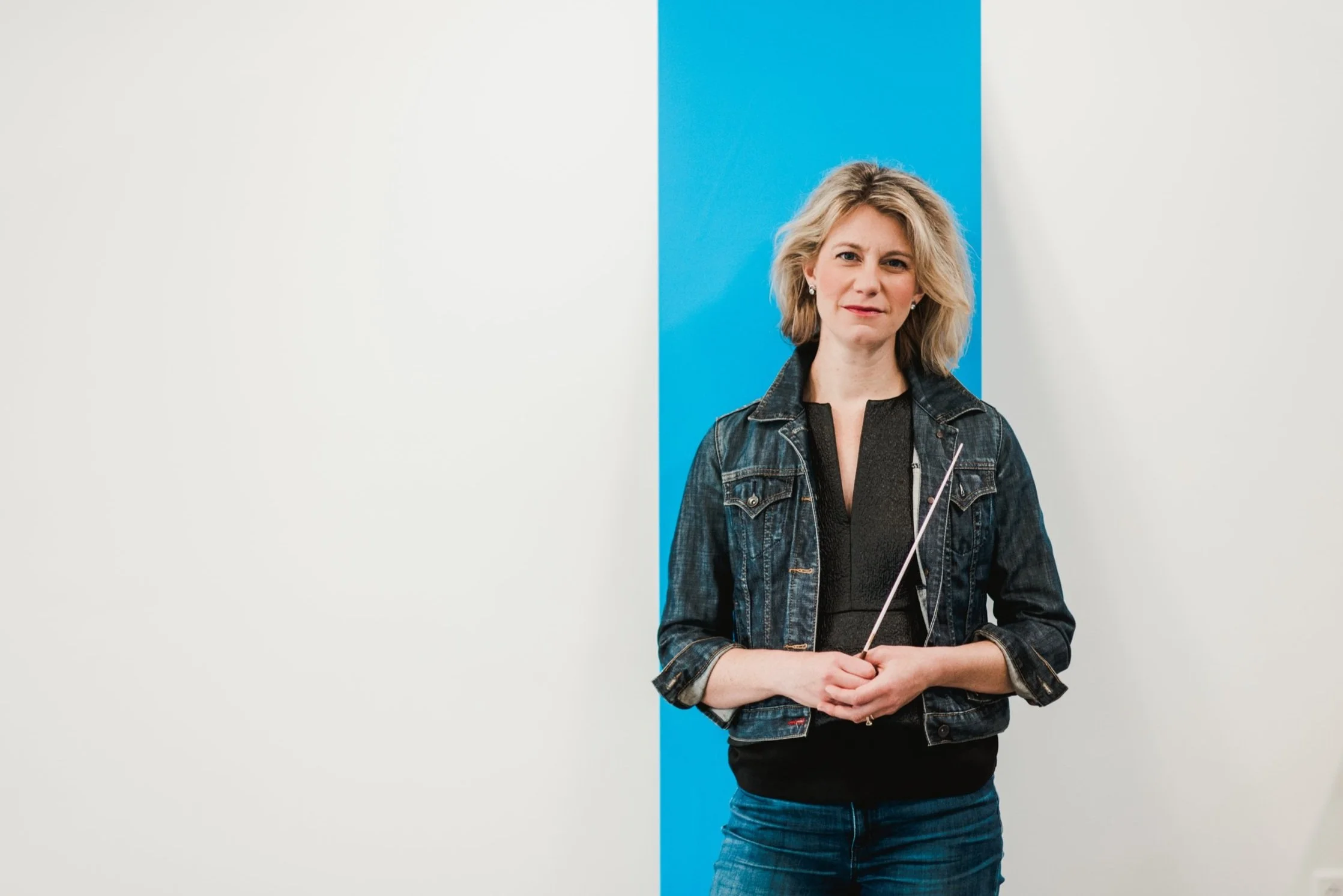
Emily Isaacson remembers attending classical concerts as a teenager, feeling the music viscerally, connecting with the sound. The music was exciting, passionate — it made her want to move her body. It let her tap into feelings she could not put into words. At the same time, she felt a disconnect between the way the music moved her and the way traditional concerts wanted Isaacson to listen to it — in silence, in a cathedral-like hall, following unwritten rules. She wants to “clap between movements and sway in the aisles,” she says. And so she has made it her work to bring music to the community as a shared experience and a call to action. At Williams College and around the world, she has seen many kinds of music acting as a catalyst, she says, and drawing community together. She wants to see classical music doing that work and holding that energy. So she has started her own center for it,.

Read More

Art needs to take place wherever it needs to take place. We don’t have to abide by the rules.

Art needs to take place wherever it needs to take place. We don’t have to abide by the rules.

While recognizing the incredible destruction COVID-19 has caused, the pandemic ... has shown us why we need music, why we need live performance, how the arts connect us to each other and to ourselves. The absence of 'normal' creates space to ask if normal was working, and for whom; and if it wasn’t working, how can we maintain the artistic integrity and emotional authenticity at the center of great performances, while bringing it to new places and including more people in the conversation?

Read More

The Oratorio Chorale and the Bowdoin Chorus Take on Netflix

The Oratorio Chorale and the Bowdoin Chorus Take on Netflix

“My main competition is Netflix. I want people to get off their couches and go out and experience the power and magic of live music…Normally I get to move to the music and audience members just sit there. I want them to really engage with the music while walking through the 10 sonic stations. They can even bring their kids and if the kids run around, that’s just fine.” Clearly, Emily Isaacson is not your up-tight, paint-by-the-numbers conductor.

Read More

Love Letter to Live Music

Love Letter to Live Music

Dear Live Music,

I’ve missed you! I have been filling your void with Spotify and the radio, but it’s just not the same. It’s like eating at McDonald’s when what I really want is Fore Street—it fills me up, but it doesn’t nourish me.

You see, you make me feel alive. With you, I am not just listening, I’m experiencing. If it’s a single musician, their sweat and furrowed brow remind me of the years of practice, dedication, and sacrifice that they bring to this moment. If it’s an ensemble, I am in awe that the unified focus and collective energy of 30, 50, 150 people are all for my ears.

For our ears….

Read More

Maine Points

Maine Points

Portland Bach Experience began in 2017 as a week-long festival in June, and has expanded to include an October weekend festival, as well as other classical music events throughout the year.

In 2020, Portland Bach Experience became a program of Classical Uprising, a 501(c)(3) nonprofit organization offering a bold rethinking of the classical music experience through immersive events, performances, and educational programs. Classical Uprising’s programs include Portland Bach Experience, Oratorio Chorale, and Classical Uprising Youth Choirs, which combined serve over 120 adult amateur singers, 70 young musicians, 60 professional artists, and more than 8,000 audience members.

Read More